
I want to begin with something important: this analogy is not meant to make light of what our men and women face in combat. It’s simply a way to help people understand what life can feel like for combat veterans after returning home—and by extension, what many trauma survivors experience.
Like all analogies, this one isn’t perfect. There will be places where it breaks down. My hope is that you allow it to work where it works and forgive the places where it doesn’t.
And while this applies broadly to PTSD, I’ve found it resonates most deeply with those suffering at the severe end of the spectrum—the ones who sometimes lose their lives to suicide. Every time I hear of a veteran dying this way, my heart aches because I know what that often means: they couldn’t find a way to reconcile the world they lived in before trauma with the one they woke up to after. My hope is that this story can help people understand that struggle—and maybe, through that understanding, help create space for healing.
The goal here isn’t to glorify or minimize what our men and women face on the frontlines. It’s simply to give civilians a window into the mindset that trauma can create—and to spark empathy and support for those who live with it every day.
If you’ve never seen The Matrix, it’s a science fiction movie where the main character, Neo, discovers that the world he’s been living in is actually a simulation. When he wakes up, he realizes everything he believed about reality was a lie. For many trauma survivors, that experience of waking up to a new, unsettling reality feels painfully familiar.
The Safe World Before Trauma
Every veteran I’ve ever worked with has a different story—different hometowns, different branches of service, different combat zones. But when I ask what they believed about the world before combat, I hear the same thing over and over: “I was naïve.”
They don’t always use that word, but the sentiment is the same. For those with stable childhoods, combat shatters the belief that the world is fundamentally safe. For those who grew up with hardship, combat confirms the darker truths they suspected, only on a much bigger scale.
Before trauma, most of us live in what I call “the safe world.” It’s the version of reality where you believe that if you work hard, act with integrity, and play by the rules, things will generally turn out okay. This belief gives us the courage to trust, to build relationships, to plan for the future.
In The Matrix, this is Neo’s life before meeting Morpheus. A job, a routine, a sense of normalcy. It isn’t perfect, but it’s predictable. Safe.
Then, everything changes.

Before trauma, most of us live in the ‘safe world’—predictable and stable.
The Red Pill Moment: When Trauma Hits
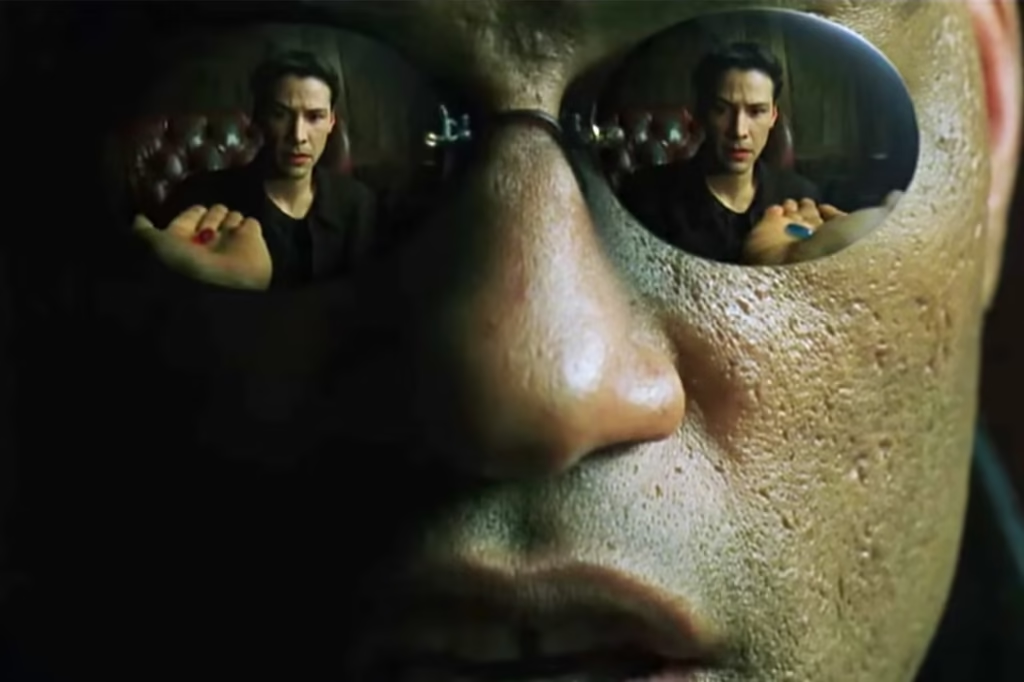
When Morpheus offers Neo the choice between the blue pill and the red pill, it’s dramatic because we know there’s no going back. Once Neo chooses to see reality, the illusion collapses.
For combat veterans, trauma often feels like being forced to swallow the red pill. Except there’s no choice. One day they’re living in the “safe world.” The next, that world is gone—and it can never be fully recovered.
When Neo wakes up in the pod, gasping and disoriented, he realizes everything he thought was real was just a construct. That scene perfectly mirrors how many trauma survivors describe their new reality:
-
“I feel like I’m living in a different world now.”
-
“I’m not the same person anymore.”
-
“The person I used to be is gone.”
Trauma doesn’t just leave scars; it rewires how the brain perceives reality. Psychologist Janina Fisher calls trauma “an overwhelming experience that shatters a person’s sense of safety and connection.” Like Neo, once you’ve seen the truth, you can’t unsee it.
When trauma hits, the rules change. Everything you trusted crumbles
Back in the Matrix: Coming Home
Now imagine this: Neo wakes up, learns the truth, and is then shoved back into the Matrix with no powers and no ability to forget what he’s seen. He’s surrounded by people who still believe the illusion is real.
That’s what many combat veterans describe when they return home. They’ve seen the “real world”—the raw, violent side of humanity that most civilians will never know. And then they’re dropped back into suburban life, told to “relax,” and surrounded by people who have no idea what the world really looks like outside the Matrix.
One veteran told me, “It’s like everyone’s living in a dream, and I’m wide awake in the middle of it.” That sense of alienation can become a prison, especially if they feel they can’t talk about it or no one will understand.

Coming home after combat can feel like being dropped back into the Matrix with no way to forget what you’ve seen.
Agents and Triggers
Morpheus warns Neo: “Anyone still plugged into the Matrix can become an agent.”
For people with PTSD, that line hits home. Hypervigilance—the sense that danger can come from anywhere—is one of the most common symptoms. Triggers aren’t just loud noises or flashbacks; they can be people.
Even well-meaning friends or family can unknowingly “become agents” by saying things like:
“It’s over now. You’re safe.”
“You just need to move on.”
“That was years ago.”
These comments, often meant to help, can make veterans feel even more disconnected, reinforcing the idea that no one really sees the “real world” they’ve woken up to.
Hypervigilance: when anyone around you can suddenly feel like a threat.
Therapy as the Construct
One of my favorite scenes in The Matrix is Neo’s training in the Construct—the white space where he learns to fight, jump, and understand the rules of the new world. Therapy for trauma survivors often serves the same purpose.
You can’t go back to the “safe world,” but you can learn to navigate the new one. Evidence-based trauma therapies like Cognitive Processing Therapy (CPT), EMDR, and Somatic Experiencing help survivors:
Challenge the beliefs trauma left behind (“I’m never safe,” “I can’t trust anyone”)
Calm the nervous system so it isn’t constantly stuck in fight-or-flight mode
Build a new sense of identity that integrates what they’ve seen without being defined by it
Therapy doesn’t erase the red pill moment. It teaches you how to live—and thrive—in the real world you’ve awakened to.
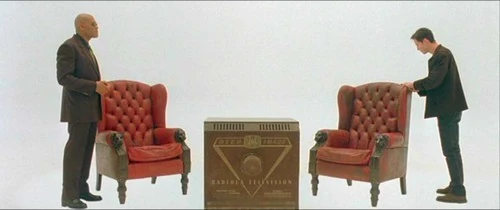
Therapy acts as the Construct, helping you learn the rules of your new reality
There Is No Spoon
Remember the little boy in the Oracle’s kitchen who tells Neo, “There is no spoon”? He’s teaching Neo that reality isn’t fixed—it bends to perception.
Healing from trauma often involves a similar shift. The memories don’t disappear, but how you relate to them changes. Instead of defining your present, they become part of your story. Through therapy, many veterans realize they can’t change what they saw, but they can reshape the meaning they attach to it.
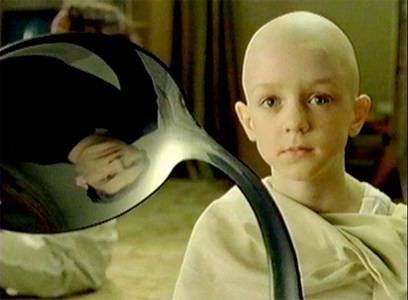
Healing shifts your perspective—like realizing ‘there is no spoon.’
From Surviving To Mastery
By the end of The Matrix, Neo doesn’t just survive in the real world—he bends it to his will. That’s not just a sci-fi fantasy; it’s a powerful metaphor for post-traumatic growth.
I’ve seen veterans who once felt hopeless rebuild their lives, reclaim their sense of purpose, and even use their experiences to help others. Healing isn’t about going back to who you were before your military service. It’s about integrating what you’ve seen into a new, stronger identity.
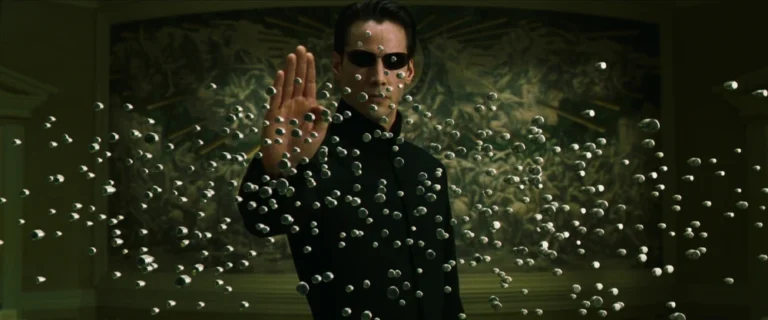
Post-traumatic growth is about integration and strength, not erasing the past.
Taking the First Step
Trauma forces you to swallow a red pill you never asked for. But like Neo, you don’t have to face this new world alone. With the right guidance, you can learn the rules of this reality, find your footing, and discover strength you didn’t know you had.
If you or someone you love is struggling to reconcile life before and after trauma, help is available. My practice specializes in trauma therapy for veterans, first responders, and civilians who’ve faced life-altering events.
Schedule a free 15-minute consult and let’s take the first step together. You can’t go back to the old world, but you can build a new one.